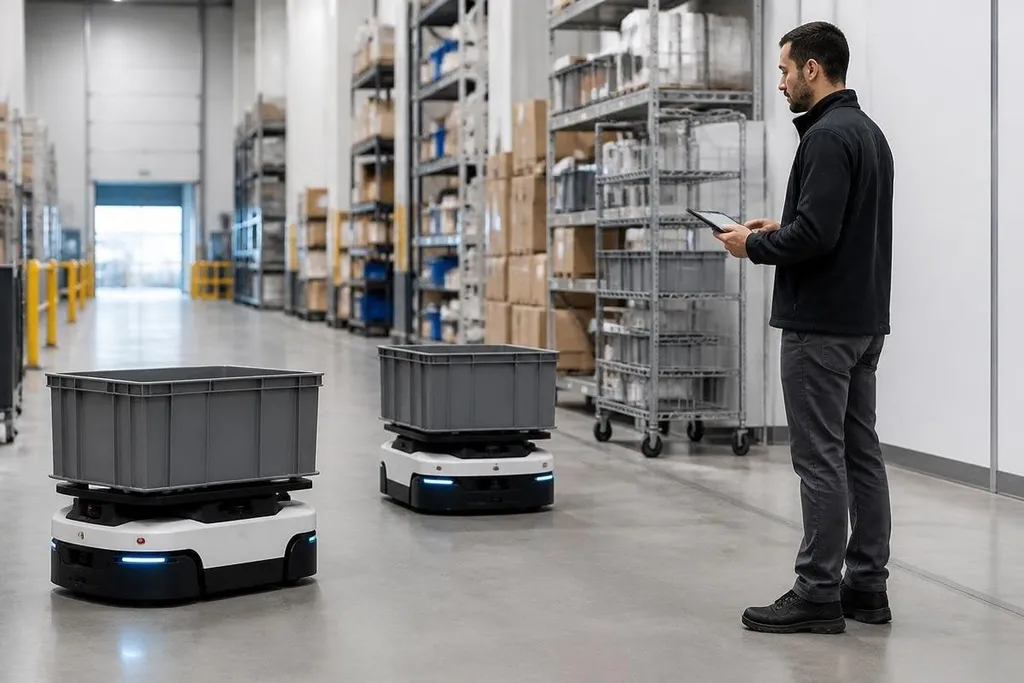
A shipping robot can move a parcel, sort an item, or carry a tote between work areas. The larger business opportunity sits around that task: software, service work, site changes, and data that help the robot keep working.
If you’re assessing this market, the useful question is not only who makes the robot. Ask who pays for the work around it, and which part can produce repeat revenue.
- Robot sales are one piece: recurring income can come from software, service, spare parts, or fleet support.
- The buyer pays for an outcome: fewer manual moves, steadier parcel flow, or better use of floor space.
- The hard part starts after delivery: sites need mapping, safety checks, training, repairs, and process changes.
The machine is only the first sale
A shipping robot needs a place to move, a task to perform, and rules for sharing space with people and other equipment. That creates work for companies that install the system and connect it to warehouse software.
A robot may need to read job instructions from a warehouse management system. It may also need routes, charging points, access controls, and a way to report faults. Each connection gives a software or integration company a role beside the robot maker.
This matters to a buyer because a machine that cannot fit the site creates extra work instead of removing it. A supplier that can map the floor, connect the task system, and train staff may win the contract even when it did not build the robot.
Recurring revenue comes from keeping robots moving
Shipping work runs through repeated tasks. A fleet may need inspections, battery checks, wheel replacement, software updates, and remote help when a robot stops in the wrong place.
That creates several business models. A company can charge for a service plan, price support by robot, sell replacement parts, or manage the fleet for the site owner. The right model depends on who can respond quickly and who has access to the machine’s operating data.
The buyer should check what the service plan covers. A low purchase price can look different once repair visits, spare batteries, software fees, and staff training enter the budget.
For a buyer pricing a shipping-robot fleet, shipping robot reporting from Robot24.com can add company names, test sites, and dates to the claims behind a deployment. Those details matter before software takes over the schedules, routes, and handoffs around each robot.
Software can control the work around the robot
A shipping robot does not decide the whole delivery process on its own. Software can assign tasks, send jobs to available robots, watch battery levels, and flag blocked routes.
That software may also connect the robot fleet to conveyors, storage systems, barcode scanners, and packing stations. The business value comes from keeping those steps connected, because one stalled handoff can slow the work that follows.
This creates room for companies that build fleet software without making the hardware. It also gives warehouse operators a reason to ask for open interfaces and clear data access before they sign a contract.
New services appear at the site
Many buildings were not designed around mobile robots. A deployment may need marked travel lanes, charging areas, network coverage, safety barriers, or changes to the order-picking process.
Those changes create work for installers, safety consultants, facilities teams, and training providers. They also create a local service market, since a nearby team can inspect equipment and fix site problems faster than a distant supplier.
The business case still depends on the task. A robot moving light parcels over a short route may solve a narrow problem. A longer route with repeated trips may give the owner more work for the same system, but that result has to be checked at the site.
A practical way to judge the opportunity
Use this checklist before backing a shipping-robot business or buying its service:
- Name the paid task: state exactly what the robot moves, where it moves it, and how often.
- Find the repeat charge: check whether income comes from service, software, parts, training, or fleet management.
- Check site work: list the changes needed for routes, charging, network access, and safe human movement.
- Test the handoffs: trace what happens when a robot reaches a conveyor, packing area, lift, or loading point.
- Set a failure plan: decide who responds when a robot stops and how long the site can wait.
- Ask for data rights: confirm who can read fleet data and whether the customer can change suppliers later.
I’d start with service and integration before building a new robot. Hardware carries development and production costs, while site support solves problems that appear only after deployment.
The strongest opening may belong to the company that keeps a mixed fleet working across real shipping tasks. The machine gets the contract started; the work around it decides whether the contract lasts.